
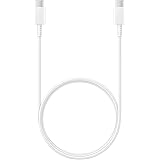
Samsung Original Type C to C Cable - 3.28 Feet (1 Meter), White
₹314.00 (as of October 27, 2026 17:07 GMT +05:30 - More infoProduct prices and availability are accurate as of the date/time indicated and are subject to change. Any price and availability information displayed on [relevant Amazon Site(s), as applicable] at the time of purchase will apply to the purchase of this product.)
OnePlus N6 | 6GB+128GB | Midnight Green | Segment's Biggest 8000mAh Battery | Segment's Fastest 45W Charging | 60-Month Smoothness | Smooth 120Hz Display | 50MP Camera | Military-Grade Durability
₹26,999.00 (as of October 27, 2026 17:07 GMT +05:30 - More infoProduct prices and availability are accurate as of the date/time indicated and are subject to change. Any price and availability information displayed on [relevant Amazon Site(s), as applicable] at the time of purchase will apply to the purchase of this product.)
Watch the original video: The 1-Line AI Prompt That Changes Everything
Disclosure: This post may contain affiliate links. If you buy through them, Informative Media may earn a small commission at no extra cost to you.
Quick Summary
- Master AI by making it ask YOU questions first.
- The revolutionary “ask me questions” prompt builds crucial context.
- Achieve 100%+ better results from ChatGPT, Gemini, and more.
- Eliminate the need for lengthy, detailed initial prompts.
- Transform your AI workflow for coding, content, and problem-solving.
Amazon Finds
Recommended Products
Getting AI to understand exactly what you need can feel like a guessing game. You pour in detailed instructions, hoping for the best, but often end up with outputs that miss the mark. If you’ve been wrestling with ChatGPT, Gemini, or other AI models to get precise, high-quality results, we’ve found a game-changer. This isn’t about complex jargon or intricate prompt engineering; it’s about a single, powerful line of text that flips the script.
We recently stumbled upon a YouTube video titled The 1-Line AI Prompt That Changes Everything, and it delivers exactly what it promises. The core idea is surprisingly simple: instead of you trying to anticipate every possible detail the AI might need, you instruct the AI to ask *you* the questions. This approach forces the AI to build its own context, leading to remarkably better, more tailored outputs.
Why Your Detailed Prompts Might Be Failing
We’re all told to be specific with our AI prompts. While this is good advice, writing truly exhaustive prompts can be incredibly time-consuming and difficult. You might not even know what details are crucial for the AI to generate the best possible response. This is where the AI’s lack of inherent context becomes a major roadblock. It doesn’t know your specific project, your audience, or your exact goal unless you spell it out perfectly – which is hard to do.
The Solution: Make the AI Ask
The breakthrough strategy, as demonstrated in the video, is to include a simple instruction in your prompt: “Keep on asking me relevant questions to build your context.” This single line empowers the AI. Instead of you guessing what information is needed, the AI takes the initiative to gather all the necessary details by asking you targeted questions. This is a massive shift from passive instruction to active collaboration with the AI.
Real-World Impact: From One Line to 120 Questions
The video shares a compelling real-world example. By using this questioning technique, a task that might have initially required a sprawling, manual prompt resulted in the AI generating over 120 clarifying questions. This demonstrates how much context the AI was able to build and how much more specific and effective the final output would be. Imagine the possibilities for content creation, coding assistance, or complex problem-solving.
How to Implement This Prompting Technique
Ready to try it? Here’s the basic idea:
- Start with your core request: What do you want the AI to do?
- Add the magic line: Append “Keep on asking me relevant questions to build your context.” to your request.
- Answer the AI’s questions: Be thorough and honest in your responses.
This method works across various AI models, including ChatGPT and Gemini. It’s a fantastic way to leverage the full potential of large language models without the steep learning curve of advanced prompt engineering. For those looking to dive deeper, check out our Gemini Pro 18 Months Trick for more AI insights.
Tips for Superior AI Quality
- Be Patient: Let the AI ask its questions. Don’t rush the process.
- Be Honest: Provide accurate information when answering the AI’s queries.
- Iterate: If the AI doesn’t ask a crucial question, you can gently guide it or add that detail yourself after its initial questioning phase.
- Combine with Other Techniques: For image generation, you might still need specific visual prompts, but this context-building approach can enhance the textual descriptions. See our guide on ChatGPT Photo Editing for related tips.
Frequently Asked Questions
- Will this one-line prompt work with all AI models?
- While the core principle of asking for clarification is universal, the exact phrasing might need minor adjustments for different AI models. However, the video suggests it’s highly effective across major platforms like ChatGPT and Gemini.
- Do I still need to write detailed prompts?
- No, this technique drastically reduces the need for lengthy initial prompts. The AI takes on the burden of gathering details by asking you questions.
- What if the AI doesn’t ask a question I think is important?
- You can always add that detail yourself, either by rephrasing your initial request or by providing it after the AI has asked its initial set of questions. You can also try variations of the “ask me questions” prompt.
Conclusion
Stop guessing what your AI needs and start guiding it effectively. This simple one-line prompt is a powerful tool for anyone looking to elevate their AI interactions. By making the AI an active participant in defining the task, you ensure higher quality, more relevant outputs, and a more efficient workflow. Give it a try and transform how you use AI!
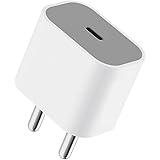
Apple 20W USB-C Power Adapter (for iPhone, iPad & AirPods), White
₹1,699.00 (as of October 27, 2026 17:07 GMT +05:30 - More infoProduct prices and availability are accurate as of the date/time indicated and are subject to change. Any price and availability information displayed on [relevant Amazon Site(s), as applicable] at the time of purchase will apply to the purchase of this product.)